AI Governance Checklist for Automation Projects in Regulated Industries
October 12, 2026 - AI


October 09, 2026 - AI

An integrator walks through your plant, stops at a manual workstation, and says the word "robot." Everyone nods. Six months later the cell is installed and running at half its expected rate, because parts arrive in three different orientations and nobody ever wrote down the rule for which one goes first.
That is the ordinary way these projects go sideways. Automation rarely fails because the hardware was wrong. It fails because the process around the hardware was never ready for it. Before you sign a purchase order or accept a delivery date, work through the ten readiness points below. None of them require capital. All of them save money later.
Automation runs on records: part numbers, routings, bills of material, cycle times, scrap codes. If your ERP says a job takes 22 minutes and your operators know it takes 31 on a bad material day, a robot will simply produce the wrong number faster.
Pick one product family you are considering automating. Pull three months of production history for it and read it like an auditor:
Fix the worst of it before you go further. Clean labels, consistent naming and a barcode on every container do more for an automation project than a faster controller.
Automation multiplies whatever is already there. If your manual cell runs at 8% rework, a robot will produce rework at whatever rate you feed it. So test the process first: run the target operation manually, at the takt time you expect automation to hit, for two full weeks. No overtime heroics, no borrowed help from the day shift.
If the cell cannot hit the target with people who know the job, it will not hit it with a machine. Variation is what kills these projects, and it usually hides in places that never appear on a process sheet: material that arrives inconsistently, fixtures that wear by the end of the shift, deburring that one operator does and another skips.
Automation does not remove judgment calls. It exposes them. Write them down before someone has to program around them.
Before anyone quotes a cell, confirm the boring things on site. Floor space with room for maintenance access, not just the machine footprint. Power of the right voltage and amperage at the right panel. Compressed air at stable pressure and dry enough for the components in question. Lighting that does not change between day and night shifts. Enough clearance for a forklift, a technician and a person carrying a tool bag.
On the digital side, ask who owns machine data and what happens to it. If your equipment speaks three protocols and nobody has the files, that is a project cost, not a footnote. Talk to whoever runs your network about segmentation and remote access early, because the answer often changes the equipment list.
Someone on staff has to own this, with hours carved out of their week and a title they can point to. A project owned by "whoever is free" becomes a project owned by nobody.
Operators who understand why the cell stops will keep it running. Operators who were handed a manual on installation day will find ways to work around it. Bring your maintenance technician into the integration process from the first design meeting, so they can ask the questions a vendor will not volunteer answers to. Set up cross-training on the new equipment so that one vacation does not stop production.
Risk assessment is not a document you produce at the end to satisfy an inspector. It shapes the layout, the guarding, the light curtains, the e-stop placement and the lockout procedure. Recognized industrial robot safety standards such as ISO 10218 and ISO/TS 15066 exist for good reason, and local workplace regulations will apply on top of them.
Have a qualified safety professional review the plan before the equipment is ordered, while changes are still cheap. The same goes for insurance, electrical work and any building modifications: check what your policy and local codes require, and take professional advice rather than assuming. If you are unsure whether a task can be done safely by a collaborative robot and a person in the same space, that is a question for a specialist, not a brochure.
Work through these honestly. A "no" is not a reason to cancel the project; it is a task with an owner and a date.
Start with the dullest, most repetitive job in the plant: the one with a single part family, steady demand and a process that already behaves. Automate that, learn what your organization does well and badly, then move to something harder. Readiness is not paperwork. It is the difference between a cell that pays for itself and a very expensive machine that taught your team to distrust the whole idea.
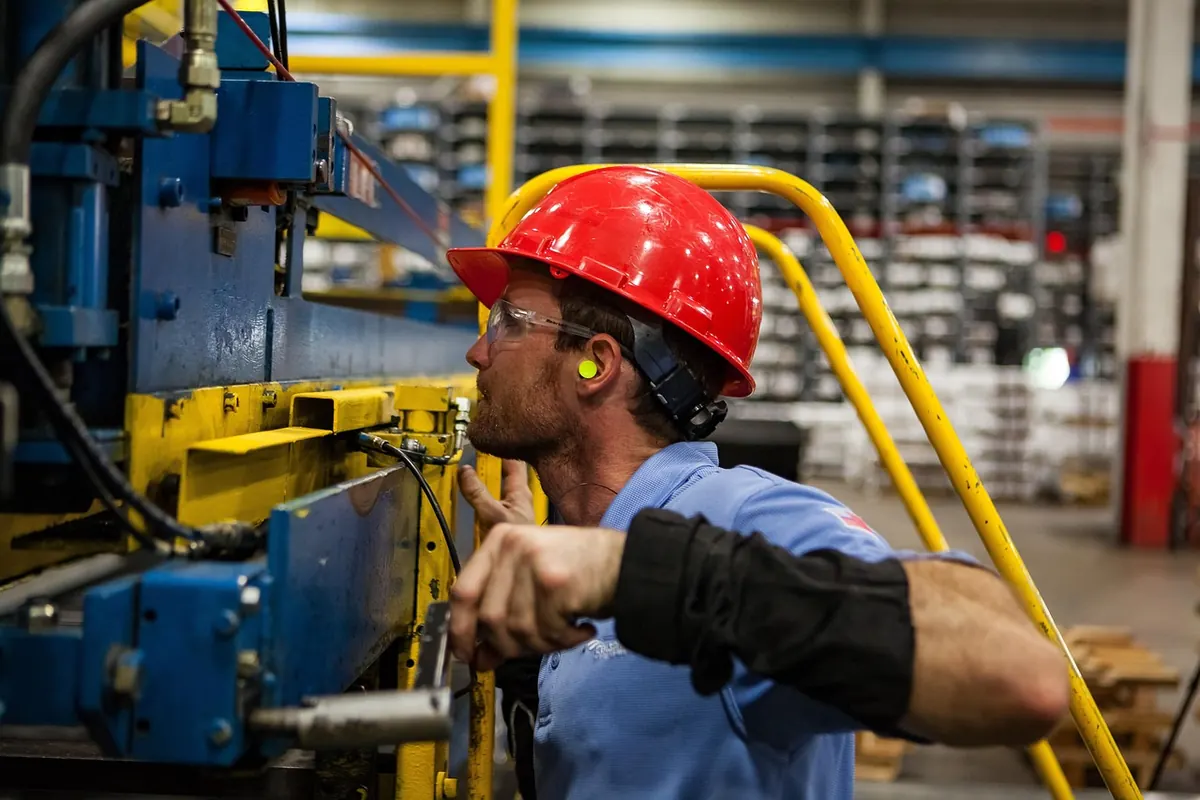
Photo: Vitaly Gariev / Pexels

A practical governance checklist for automation projects in regulated industries: bias audits, replayable audit...

Cobots and caged industrial robots solve different problems. Here is how they compare on installed cost, safety,...
Copyright © 2026 Automation Alley. All Right Reserved.