AI Governance Checklist for Automation Projects in Regulated Industries
October 12, 2026 - AI


October 09, 2026 - AI

Two requests land on the same desk on Monday morning. A support inbox keeps receiving the same six questions, and an expense approval still travels between three people by email. Both look like automation candidates, and both get pitched the same way by someone who has already decided the answer. The choice that actually matters is narrower than the sales deck suggests: do you need something that follows a rule perfectly, or something that understands a messy question? Start there, and the rest gets easier.
A rule-based workflow is a decision tree that runs itself. A trigger fires, conditions get checked, actions happen. An invoice over a threshold is routed to the finance lead, stamped, logged, and paid on schedule. Same input, same output, every time. You can draw it on a whiteboard, and a reviewer can follow it line by line.
A chatbot works with language. It takes a half-formed question and produces a useful reply, handles typos, untangles three questions crammed into one message, and can explain a policy in plain words. What it cannot promise is that the same input produces the same answer twice, or that anything actually gets done unless you wire it to the systems doing the doing.
These are complements, not rivals. The interesting design question is usually which layer sits underneath the other.
Rules break at the first exception nobody anticipated. The good news is that they break loudly: the workflow halts and someone gets an alert. Chatbots absorb exceptions gracefully, which sounds better until you notice they can fail quietly, with a polite and confident answer that is simply wrong.
Take refunds. Whether a refund is due is a calculation: purchase date, return window, item condition, payment method. Rules should own that decision. Explaining why the window closed on day fourteen, or finding an order number a customer typed with two typos, is language work. A chatbot can handle that part and then hand off a clean record so the rule can run.
The practical test is simple. If the correct outcome must be identical every single time, use rules. If the correct outcome is a helpful conversation that ends in a handoff, a chatbot earns its place.
Rule-based automation is mostly a build-time cost. Someone maps the process, configures it, and tests it. After that, running it is inexpensive and predictable, because it executes a fixed number of steps whether you have ten requests or ten thousand. The hidden cost is the process mapping itself, which is tedious, necessary, and worth doing no matter what you eventually deploy.
Chatbots carry a different shape of cost. There is platform and usage cost that scales with volume, and it keeps scaling, because every conversation consumes something. Then there is the content: answers, policies, tone, and fallback paths all need an owner who keeps them current.
The most expensive mistake runs in both directions. Put a chatbot on a high-volume, identical task and you pay per conversation for work a rule does for free. Put rules on open-ended questions and you spend the quarter writing branch after branch as exceptions pile up in your inbox.
Neither option is set-and-forget, but they age differently.
Choose the boring option when the work is boring. A rule that runs the same way every time is not a limitation, it is the feature people actually want when money, access, or compliance is involved. Keep a human in the loop for anything touching payments, health information, employment decisions, or legal obligations, and run the design past whoever owns compliance before you switch it on. Then let the chatbot do what it is good at: being patient, clear, and endlessly available at the front door.
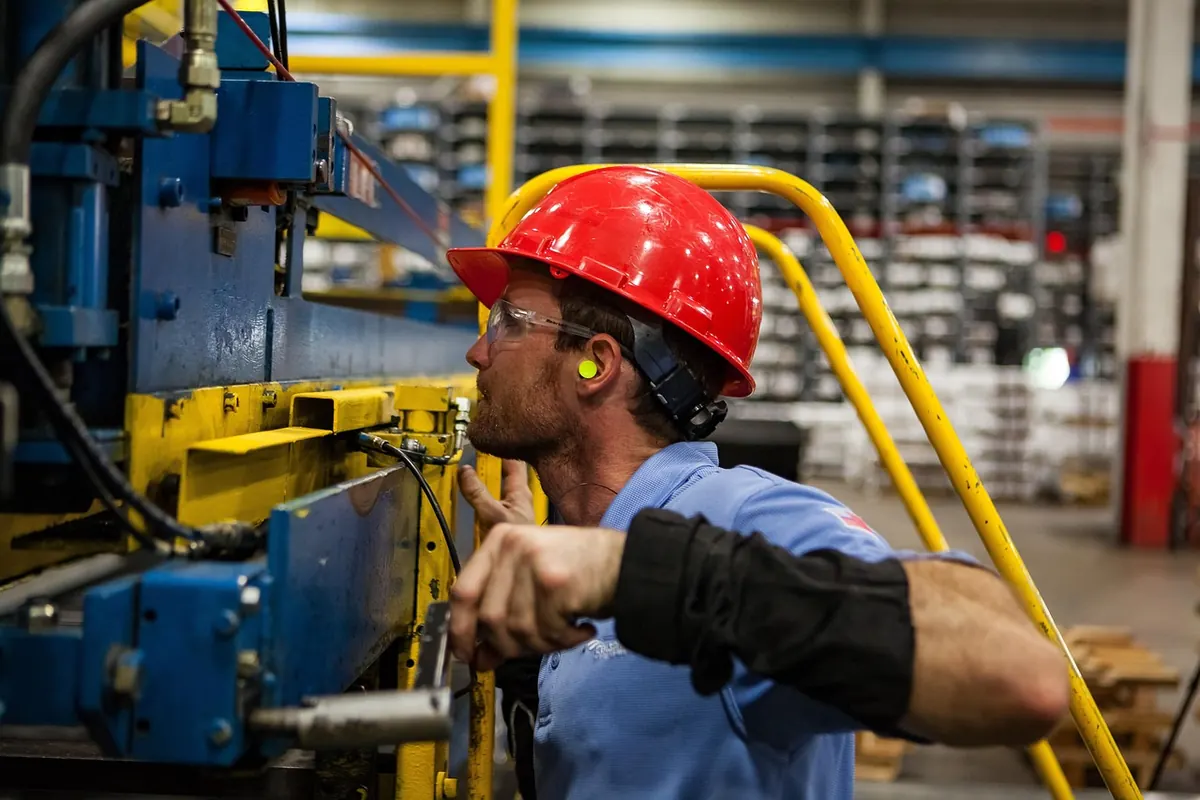
Photo: cocoandwifi / Pixabay

A practical governance checklist for automation projects in regulated industries: bias audits, replayable audit...

Cobots and caged industrial robots solve different problems. Here is how they compare on installed cost, safety,...
Copyright © 2026 Automation Alley. All Right Reserved.