AI Governance Checklist for Automation Projects in Regulated Industries
October 12, 2026 - AI


October 09, 2026 - AI

Walk through almost any Michigan plant right now and you'll find the same quiet bottleneck. A welding cell in Grand Rapids that can't staff a second shift. A molder outside Kalamazoo turning down work because changeovers eat half a day. A Tier 2 supplier in Sterling Heights where one operator is covering a job that two machines could split. The equipment that fixes these problems exists, it's proven, and your competitors are already running it. The hard part is usually the check.
Michigan has more automation funding floating around than most manufacturers realize. The trick is that it's scattered across state agencies, federal programs, utility incentives, and regional economic groups, each with its own rules, timelines, and paperwork. Here's how to sort through it without burning three months of your operations manager's time.
Almost nothing in this space is a single clean grant that pays for a robot. What you're really assembling is a stack of smaller awards, incentives, and cost-shared services that together move the project from "someday" to "ordered."
The Michigan Economic Development Corporation (MEDC) administers the state's main business incentive tools, including the Michigan Business Development Program. These awards are typically performance-based and tied to job creation and private investment, which means they tend to favor larger projects with real hiring commitments. A 25-person job shop probably won't win one on its own, but it costs nothing to make the call and ask what fits your size. MEDC also runs sector-specific support, including help for defense manufacturers through the Michigan Defense Center.
The Michigan Manufacturing Technology Center in Plymouth is part of the national Manufacturing Extension Partnership network, and it works with small and mid-sized plants on automation assessments, technology roadmaps, and cost-shared improvement projects. If you sell into defense, the federal Defense Manufacturing Community Support Program and related efforts have funded capability upgrades across the state, and Michigan's APEX Accelerators provide free help pursuing government contracts and the funding that comes with them.
DTE Energy, Consumers Energy, and rural electric cooperatives all run business efficiency programs with prescriptive rebates and custom incentives. These aren't grants, but automation that cuts idle time, right-sizes motors, improves compressed air systems, or replaces an old hydraulic press can generate a meaningful check. Confirm what's currently offered on your utility's business program page, because the incentive catalog changes annually.
Michigan's Going PRO Talent Fund, administered through the Department of Labor and Economic Opportunity and delivered by local Michigan Works! agencies, helps employers pay for employee training. Robot programming, PLC troubleshooting, and maintenance technician upskilling all fit. Applications run in cycles, so you need to be in contact with your regional Michigan Works! office well before the window opens.
Every program is different, but the same themes show up again and again. Before you invest hours in an application, check yourself against this list:
Reviewers aren't looking for enthusiasm. They're looking for a defensible number. Work through these steps in order:
Write to the scoring rubric. If the rubric awards points for workforce impact, spend a paragraph on workforce impact. If it awards points for capital investment, lead with the capital investment. Reviewers score against a checklist, not a narrative.
Use their vocabulary. "Industry 4.0," "automation," and "advanced manufacturing" may all describe the same project, but the program has one preferred term, and using it signals you read the guidelines.
Explain what happens without the money. Capacity lost to a competitor in another state, a customer you'd have to turn away, a line you'd have to shut down. Concrete consequences beat general optimism.
Keep the budget boring and clean. One page, itemized, with quotes attached and nothing unexplained. A tidy budget reads as a tidy company.
Get a cold read. Hand the draft to someone who knows nothing about your plant and ask them to explain your project back to you. If they can't, rewrite it.
The most expensive mistake is buying first and asking later. Approval timing rules are strict, and a machine already sitting on your floor is generally a machine you paid for yourself.
Second is underestimating integration and training, then discovering you need a second round of funding you can't get. Third is treating a utility rebate like a grant and building a budget around it. Fourth is applying to six programs at once with the same recycled narrative, which shows in every submission. And fifth is skipping the free help. The Michigan Manufacturing Technology Center, your regional Michigan Works! office, the Michigan SBDC, and APEX Accelerators all exist to walk manufacturers through this at no cost. Regional groups like Automation Alley in Troy can point you toward assessments and Industry 4.0 resources as well.
One practical note: award rules, match requirements, and the tax treatment of an award all change, and they affect your cash flow. Confirm eligibility with the program officer and the accounting side with your CPA or lender before you commit capital.
Pick one machine or one cell that's costing you real money. Book an assessment with the Michigan Manufacturing Technology Center or a regional resource and have them review the bottleneck with you.
Then make two phone calls: one to your local Michigan Works! agency about training dollars, and one to your MEDC regional contact or APEX Accelerator about what's currently open. Meanwhile, pull your cycle time, scrap, and labor hours into a single page and run a payback you'd be comfortable defending to your own board.
Do that, and you'll be in a position to apply the moment a window opens, rather than scrambling to assemble numbers in the last week. In Michigan, the manufacturers who win this funding aren't the ones with the biggest projects. They're the ones who started the paperwork before they needed it.
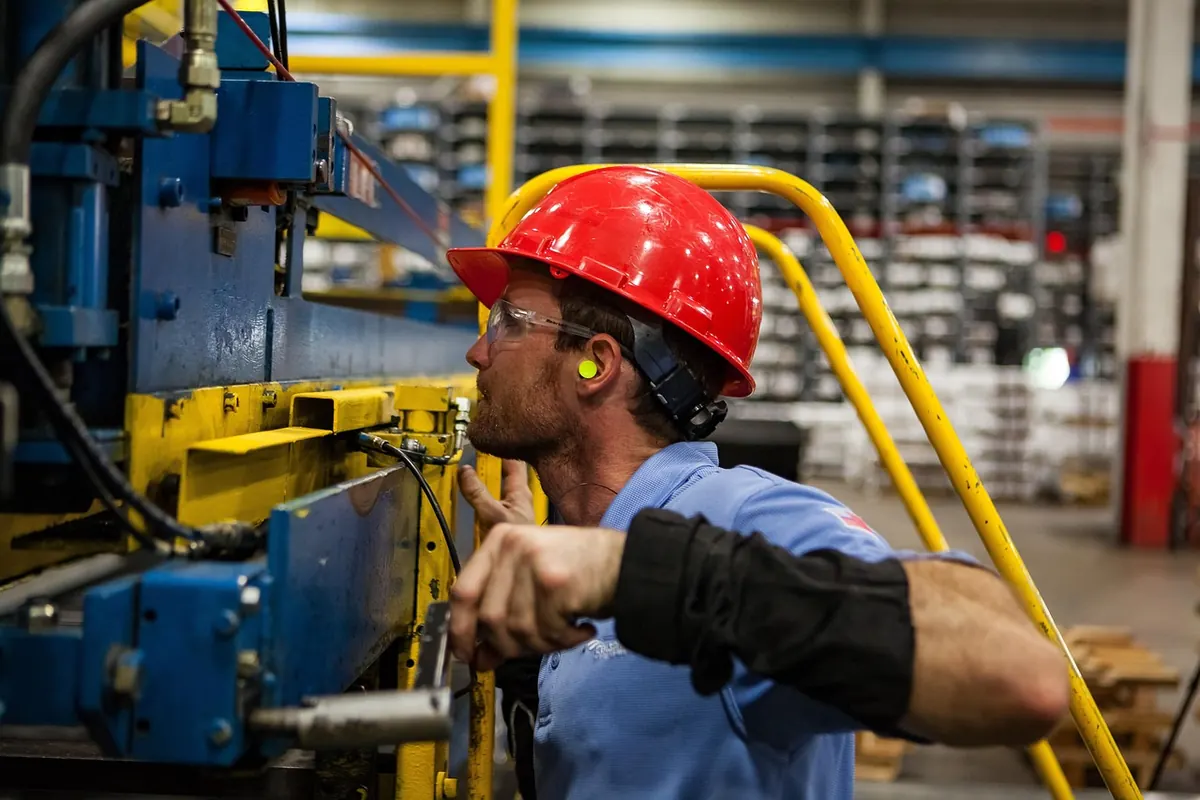
Photo: Alexas_Fotos / Pixabay

A practical governance checklist for automation projects in regulated industries: bias audits, replayable audit...

Cobots and caged industrial robots solve different problems. Here is how they compare on installed cost, safety,...
Copyright © 2026 Automation Alley. All Right Reserved.